Strategic Readiness

Debt Capacity Estimation

Debt capacity is the amount of debt a health center can afford to take on, given its historical or projected financial position. To get a preliminary estimate of debt capacity and better understand the "gap" that may need to be funded through equity contributions and/or a capital campaign in order to complete a capital project, health centers can access our Debt Capacity Calculator.

Using your most recent year's audited financial information and current expectations regarding interest rate (usually between 5% and 7%) and the desired length of the  loan (amortization); enter the information as indicated below. For "Rent Rebate," enter the annual rent amount you will save (if any) once your new facility is built.

Total Funds Available for Debt Service
Funds Available for Debt Service After Applying Debt Service Coverage Requirement of 1.25
Amount of Debt Your Center Can Support

This estimate, which includes your health center's existing debt, is based on your historical financial performance, and as such, provides a starting place to consider your possible future debt capacity. To the extent you expect your operations to change as a result of your capital project, you should also prepare multi-year detailed financial projections for your health center, and then run the same calculation to determine the feasible level of debt your projected operations can carry. Capital Link can help you prepare these projections and assist you in determining an optimal financing mix for your project.

Preliminary Feasibility Analysis (PFA)

A Preliminary Feasibility Analysis (PFA) uses health center financial audits to assess the feasibility of a capital project before it begins. Using our Capital Capacity Information Tool (CapIT) software application, Capital Link’s PFA provides a summary of the health center’s financial trends compared to national benchmarks, evaluating the center’s financial strength as a potential lender might. The PFA also calculates the center’s debt capacity and provides typical costs for the type of project under consideration. This information helps health center management and boards consider all the relevant pre-planning details, including grant and debt funding sources and advice on next steps. This report is funded by Capital Link’s Cooperative Agreement with HRSA and is delivered at no cost to the health center.

Market Assessment Planning (MAP)

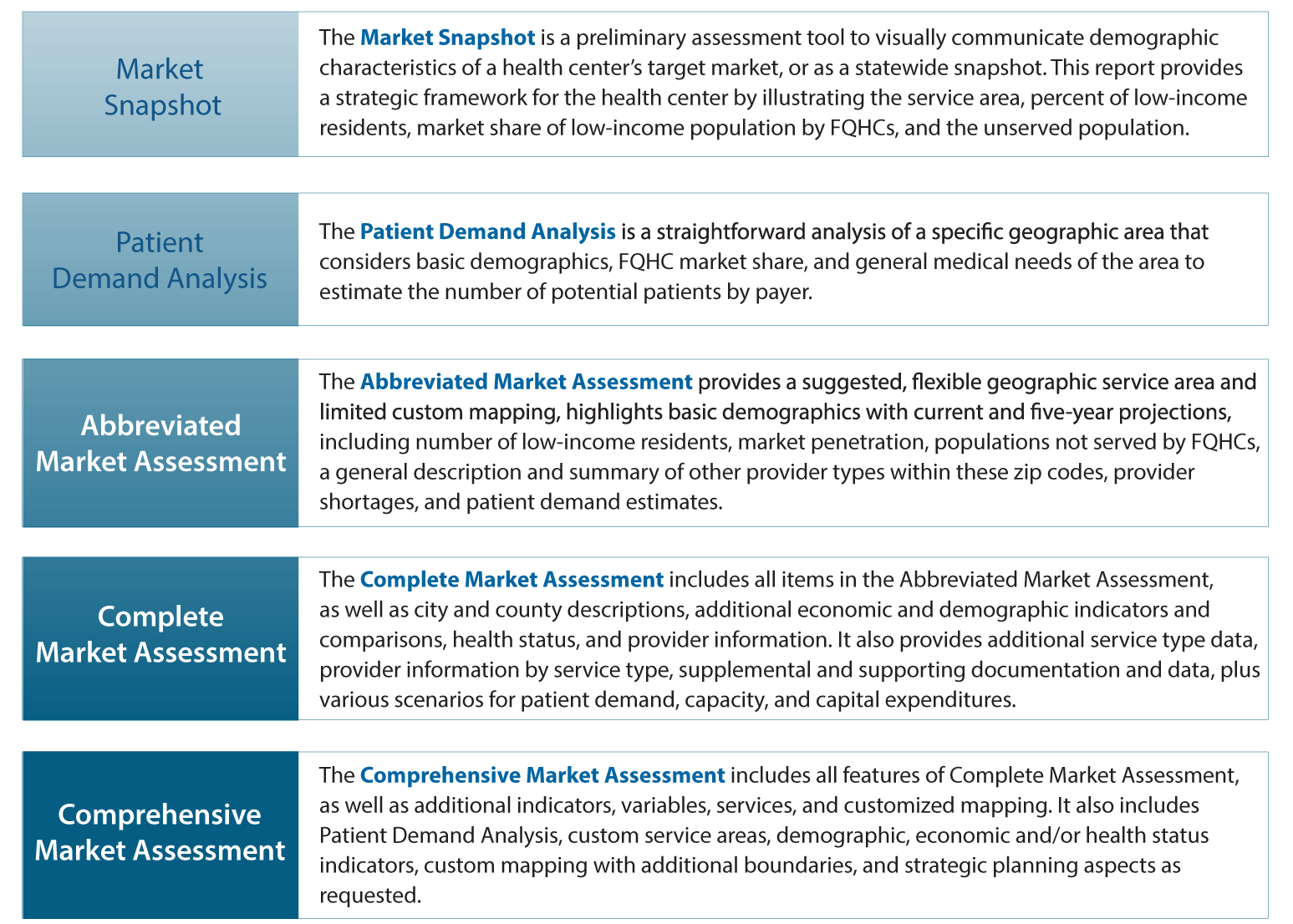
Market Assessment Planning (MAP) helps a health center evaluate its current and future markets to determine the potential for expansion. It describes the center’s market in geographic, demographic and economic terms, identifies opportunities for growth, evaluates competition in the marketplace and estimates projected market share or potential demand for health center services. This information greatly aids decision-making because it documents and justifies the health center’s growth plan. It can pinpoint unmet needs or emerging trends that can inform the center’s program and workforce planning, whether or not the health center is planning to expand. Finally, the data generated in a comprehensive market assessment can form an excellent basis for financial forecasting and operating grant proposals.

Work Plan Development

Work Plan Development is the process of delineating and mapping the steps necessary for health centers to navigate through the capital development process, from strategic capital planning to opening the doors to your new or newly-renovated health center. It begins with a generic overarching document and is then tailored to meet the specific needs of a health center, including a timeline of activities and a checklist of relevant tasks. This document is typically a follow up to the Preliminary Financial Feasibility Analysis and a precursor to Market Assessment Planning and Operations and Facilities Planning.

For more information about the services detailed above, contact us.

 
SideNavBegin
SideNavAnalyze
SideNavPlan
SideNavFinance